

Ceramic Insulators
Industrial Technical Ceramic Insulators
Precision Electrical & Thermal Isolation Components Built to Print
Industrial ceramic insulators provide critical dielectric isolation and mechanical stability in high-voltage, high-temperature, and corrosive operating environments. Unlike standard commercial plastics or lower-grade porcelains, technical ceramics maintain structural integrity, volume resistivity, and dimensional stability where organic materials carbonize or degrade.
We manufacture custom and standard technical ceramic components based on customer engineering drawings, supporting low-volume prototyping through high-volume contract manufacturing.
-
![Ceramic Bushing Insulators]() Ceramic Bushing InsulatorsCeramic bushing insulators provide reliable electrical isolation and mechanical support for conductors passing through grounded structural barriers. Engineered for high-voltage, high-temperature,...read more
Ceramic Bushing InsulatorsCeramic bushing insulators provide reliable electrical isolation and mechanical support for conductors passing through grounded structural barriers. Engineered for high-voltage, high-temperature,...read more -
![Ceramic Standoff Insulators]() Ceramic Standoff InsulatorsCeramic standoff insulators provide rigid mechanical support while maintaining strict electrical isolation between live busbars/conductors and grounded chassis. Molded from high-purity technical...read more
Ceramic Standoff InsulatorsCeramic standoff insulators provide rigid mechanical support while maintaining strict electrical isolation between live busbars/conductors and grounded chassis. Molded from high-purity technical...read more -
![High-Temperature Ceramic Insulators]() High-Temperature Ceramic InsulatorsOur high-temperature ceramic insulators provide electrical isolation and mechanical stability in extreme thermal environments exceeding 1700°C. Engineered for OEMs building industrial furnaces,...read more
High-Temperature Ceramic InsulatorsOur high-temperature ceramic insulators provide electrical isolation and mechanical stability in extreme thermal environments exceeding 1700°C. Engineered for OEMs building industrial furnaces,...read more -
![Electrical Ceramic Insulators]() Electrical Ceramic InsulatorsPrecision-engineered ceramic insulators designed to withstand high-voltage, extreme temperatures, and severe mechanical loads. Manufactured via dry-pressing, isostatic pressing, and wet extrusion...read more
Electrical Ceramic InsulatorsPrecision-engineered ceramic insulators designed to withstand high-voltage, extreme temperatures, and severe mechanical loads. Manufactured via dry-pressing, isostatic pressing, and wet extrusion...read more -
![High-Voltage Ceramic Insulators]() High-Voltage Ceramic InsulatorsEngineered for ultra-lightweight installation, high mechanical tensile strength, and superior hydrophobic pollution performance. Built with a solid E-glass fiber resin rod core, seamless...read more
High-Voltage Ceramic InsulatorsEngineered for ultra-lightweight installation, high mechanical tensile strength, and superior hydrophobic pollution performance. Built with a solid E-glass fiber resin rod core, seamless...read more -
![Alumina Ceramic Insulators]() Alumina Ceramic InsulatorsCeramic-to-metal assemblies combine the high dielectric and thermal stability of alumina ceramics with the ductility and connection versatility of refractory metals. These components are...read more
Alumina Ceramic InsulatorsCeramic-to-metal assemblies combine the high dielectric and thermal stability of alumina ceramics with the ductility and connection versatility of refractory metals. These components are...read more


Material Selection Guide
Selecting the correct ceramic composition dictates performance in thermal and electrical systems.
|
Material Type |
Purity / Composition |
Key Mechanical & Electrical Properties |
Typical Operating Limit |
Primary Application |
|
Alumina (Al2O3) |
95% – 99.8% |
High dielectric strength, exceptional hardness, superior wear resistance. |
Up to 1650°C |
Semiconductor chambers, high-voltage standoffs, wear liners. |
|
Steatite (MgSiO3) |
Natural silicate |
Low dielectric loss at high frequencies, good mechanical strength, cost-effective for complex shapes. |
Up to 1000°C |
RF heating insulators, resistor cores, appliance terminal blocks. |
|
Cordierite (Mg2Al4Si5O18) |
Magnesium-aluminum silicate |
Ultra-low thermal expansion coefficient, exceptional thermal shock resistance. |
Up to 1200°C |
Kiln furniture, thermocouple protection tubes, heating element supports. |
Technical Specifications & Engineering Capabilities
Engineering validation requires strict adherence to physical and electrical property baselines:
Dielectric Strength
Up to 18 kV/mm (dependent on thickness and material purity at 25°C).
Volume Resistivity
> 10¹⁴ Ω·cm at 20°C; > 10¹¹ Ω·cm at 300°C.
Dimensional Tolerance
Minimum grinding tolerance ± 0.01 mm for critical sealing faces.
Surface Finish
As-fired, ground, or laser-polished surfaces down to Ra 0.4 μm.
Consistent material performance relies on controlled upstream processing:
Powder Preparation: Spray-dried granulates with controlled binder distribution to ensure uniform green density.
Forming Methods:
Dry pressing (high-volume simple geometries).
Isostatic pressing (uniform density for large, complex shapes).
Green machining (complex features before firing).
Sintering: Controlled-atmosphere tunnel and batch kilns operating up to 1750°C to achieve full densification (> 98% theoretical density).
Post-Processing: Diamond grinding, ultrasonic machining, and metallization (manganese-molybdenum or active metal brazing) for ceramic-to-metal assemblies.
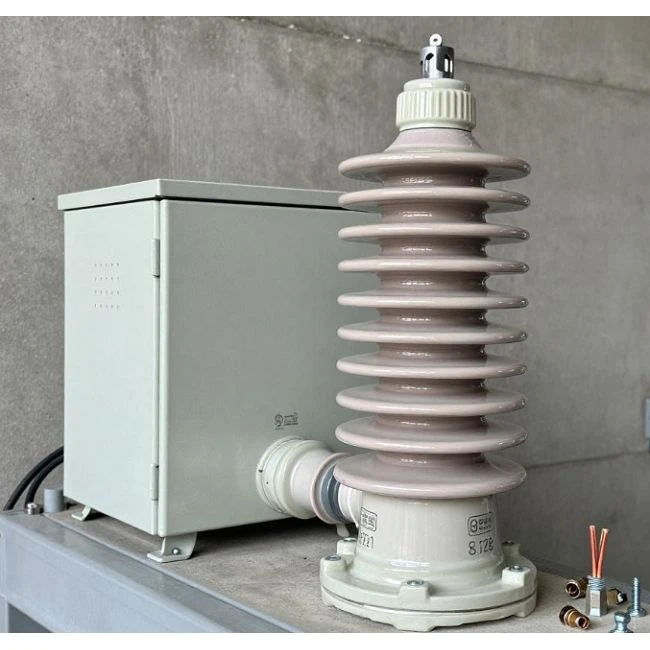
Quality Control & Testing Protocol
Every production lot undergoes rigorous verification prior to dispatch:
Dimensional Inspection
100% initial article inspection (FAI) via CMM and optical comparator; statistical process control (SPC) on critical control dimensions during mass production.
Non-Destructive Testing (NDT)
Fluorescent penetrant inspection (FPI) for surface micro-cracks; high-voltage proof testing on electrical insulators.
Material Certification
Mill Test Certificates (MTC) supplied with every shipment, verifying chemical composition (XRF analysis) and density Archimedes testing.
Application Assessment: When to Specify Technical Ceramics
Technical ceramics are specified when operating conditions exceed the limits of engineered plastics and metals:
High-Voltage Electrical Systems
High surface resistivity prevents tracking and flashover in switchgear and transformer bushings.
Thermal Processing Equipment
High melting points and zero outgassing under vacuum prevent contamination in high-temperature vacuum furnaces.
Corrosive Chemical Environments
Inert chemical structure resists aggressive acids, alkalis, and oxidation at elevated temperatures.
Supplier Qualification Criteria
When auditing technical ceramic suppliers, engineering and procurement teams should evaluate:
In-house Machining Capacity
Ability to grind sintered ceramics eliminates outsourced tolerance stacking and lead-time delays.
Batch Traceability
Clear lot coding linking raw powder batches to final sintered components.
Engineering Support
Direct collaboration between customer designers and material engineers to optimize draft angles, wall thicknesses, and shrinkage allowances during the green stage.
Frequently Asked Questions

Request an RFQ
To evaluate your component design, submit your specification package directly to our engineering team.
Required Files: 2D drawings (PDF) with critical tolerance callouts, 3D CAD models (STEP/IGES), and estimated annual usage (EAU).
Required Parameters: Operating voltage, peak working temperature, mechanical load requirements, and environmental exposure details.
As one of the most professional ceramic insulators manufacturers and suppliers in China, we also support customized service. Please rest assured to wholesale high quality ceramic insulators in stock here from our factory. Contact us for more details.
ceramic abrasion block, Ceramic Disc Heating Element, ceramic fitting component