

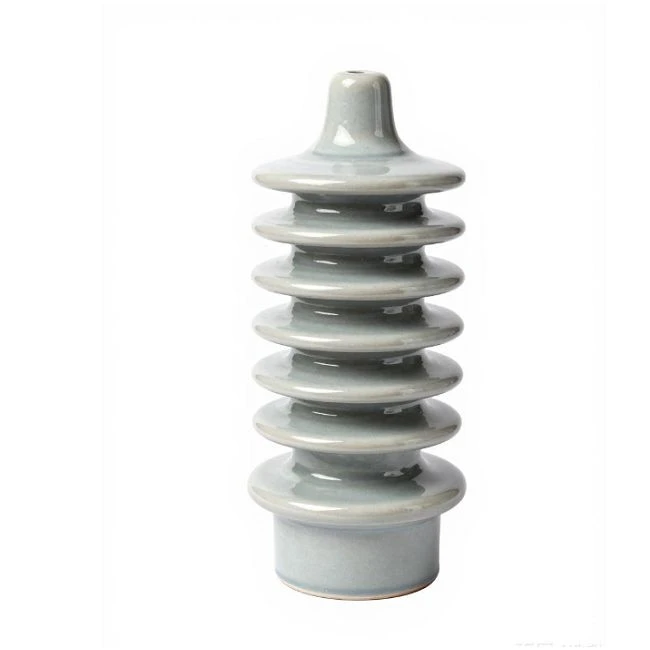
High-Performance Composite Insulators for Overhead Transmission & Distribution Lines
Engineered for ultra-lightweight installation, high mechanical tensile strength, and superior hydrophobic pollution performance. Built with a solid E-glass fiber resin rod core, seamless high-temperature vulcanized (HTV) silicone rubber housing, and hot-dip galvanized forged steel end fittings, fully compliant with IEC 61109 and ANSI C29.13 standards.
Interactive Engineering Selector & Specifications
Select your line voltage and mechanical tension class below, or download native CAD models and complete engineering assets directly for your transmission line profile design.
|
Model Series |
Standard Compliance |
System Voltage (kV) |
Specified Mechanical Load (SML) |
Creepage Distance (mm) |
|
COMP-SUS-70 |
IEC 61109 / ANSI |
35 kV - 110 kV |
70 kN |
Per string design |
|
COMP-SUS-120 |
IEC 61109 / ANSI |
110 kV - 220 kV |
120 kN |
Per string design |
|
COMP-SUS-160 |
IEC 61109 / ANSI |
220 kV - 500 kV |
160 kN |
Per string design |
|
COMP-SUS-300 |
IEC 61109 / ANSI |
330 kV - 750 kV |
300 kN |
Customized |
Material, Manufacturing & Quality Control
Long-term mechanical stability under continuous tensile stress relies on strict material control and precision crimping technology.
Core Rod (Epoxy Fiberglass): E-glass fiber reinforced epoxy resin matrix (ECR corrosion-resistant glass fiber) formulated for high resistance to acid corrosion ("brittleness" failure prevention).
Housing & Shed Interface (HTV Silicone Rubber): High-temperature vulcanized (HTV) silicone rubber with a high-percentage alumina trihydrate (ATH) filler. Provides exceptional tracking and erosion resistance while maintaining permanent hydrophobicity.
End Fitting & Crimping: Forged steel end fittings attached to the core rod using computer-controlled radial hydraulic crimping. The crimping force is precisely calibrated to distribute mechanical stress evenly without damaging glass fibers.
Weather Sealing: The junction between the metal end fitting and the silicone housing is hermetically sealed with a proprietary dual-seal interface, eliminating moisture ingress paths.
Application Validation & Field Case Performance
Composite insulators are deployed in demanding geographic corridors where weight reduction and pollution flashover prevention are critical:
Heavy Ice & Galloping Corridors: Lightweight design drastically reduces mechanical load on transmission towers, preventing structural failure under extreme ice accumulation and conductor galloping.
Desert & Coastal Contamination Zones: Hydrophobic silicone sheds transfer water droplets into discrete beads, suppressing leakage current and eliminating flashovers in heavy salt-fog or wind-blown dust environments.
Upraging Existing Grids: Enables utilities to upgrade line voltages on legacy towers without reinforcing structural foundations, due to a fraction of the weight compared to traditional porcelain strings.
Supplier Evaluation & Verification Data
For procurement teams conducting supplier pre-qualification audits, our manufacturing facility operates under transparent quality verification metrics:
Quality Management: ISO 9001:2015, ISO 14001, and ISO 45001 certified production lines.
Type Testing Credentials: 5000-hour tracking and erosion wheel tests, water diffusion tests, and mechanical load-time tests issued by independent accredited laboratories (e.g., KEMA, STRI, or equivalent ILAC-MRA recognized institutes).
Traceability: Permanent laser-marked tracking codes on metal fittings detailing batch numbers, raw material lots, and production dates. Third-party factory acceptance testing (SGS, TÜV, BV) is fully accommodated.
Request a Technical Proposal / RFQ
To initiate engineering review or request project quotation, provide the following parameters to our technical sales team:
System Nominal Voltage & Maximum Operating Voltage (kV)
Specified Mechanical Load (SML) / Tensile Strength (kN)
Target Creepage Distance or Site Pollution Severity (SIT Class I - IV)
End-fitting configuration (Tongue-Clevis, Ball-Socket, or Y-Clevis per IEC/ANSI)
Estimated quantity and required project delivery schedule
[ Submit Technical Drawing & RFQ ] (Direct routing to chief application engineer)
Frequently Asked Questions
Q: How do you prevent core rod acid corrosion ("brittleness" failure)?
A: We exclusively utilize ECR (Electrical Chemical Resistant) glass fiber in our epoxy core rods. Combined with complete adhesive bonding between the core and the HTV silicone housing, this prevents moisture penetration and nitric acid reactions under electrical stress, eliminating core embrittlement risks.
Q: What is the expected service life of your composite insulators in outdoor environments?
A: Designed for a service life exceeding 30 years. The superior tracking resistance and self-cleaning hydrophobic properties of our HTV silicone formulation ensure stable performance even under extreme UV radiation and heavy industrial pollution.
Q: Can you provide 5000-hour tracking and erosion test reports?
A: Yes. Full long-term aging test reports, including 1000-hour boiling water tests and 5000-hour multi-stress endurance test reports from internationally recognized laboratories, are available in our Engineering Dossier package.
Q: What is the standard packaging method for international maritime transport?
A: Insulators are packed individually in moisture-resistant wrapping and secured in robust, fumigation-free plywood crates designed to prevent bending or impact damage to end fittings during long-distance ocean freight.
Hot Tags: high-voltage ceramic insulators, China high-voltage ceramic insulators manufacturers, suppliers, factory, ceramic abrasion block, ceramic assembly accessory, ceramic electrical isolation part, ceramic electronic insulator part, ceramic precision fitting component, ceramic tube connector sleeve


