

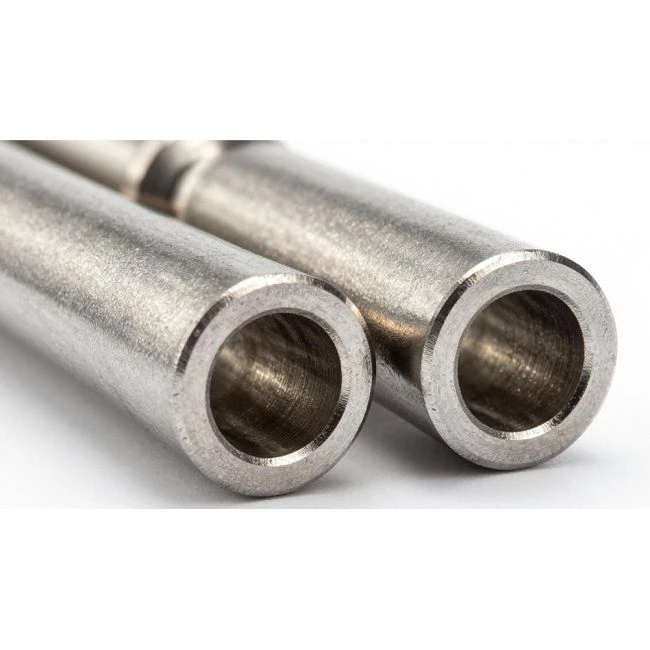
High-Performance Double-Bore Thermocouple Protection Tubes
Engineered Dual-Bore Protection Hardware for High-Temperature & Aggressive Industrial Environments
Manufactured from high-purity technical ceramics and specialized metal alloys under ISO 9001:2015 certified quality systems, our protection tubes are designed to eliminate element contamination, prevent signal drift, and maximize sensor lifespan in hostile industrial processes.
Technical Specifications & Material Selection Matrix
Selecting the correct protection tube material dictates sensor survivability. The engineering grades, purity thresholds, and dual-unit operational parameters utilized in our manufacturing facility are outlined below:
|
Material Grade |
Purity / Composition |
Max. Operating Temp. (Metric / Imperial) |
Primary Characteristics & Environmental Resistance |
|
Recrystallized Alumina (Al2O3) |
99.3% min. |
1700°C - 1800°C / 3092°F - 3272°F |
Gas-tight, exceptional electrical resistivity at high heat, highly resistant to reducing atmospheres. |
|
Mullite (3Al2O3 · 2SiO2) |
Standard Ceramic |
1400°C - 1500°C / 2552°F - 2732°F |
Moderate thermal shock resistance, cost-effective for general industrial furnaces. |
|
Silicon Carbide (SiC) |
Reaction Bonded / Nitride Bonded |
1400°C - 1550°C / 2552°F - 2822°F |
Extreme abrasion resistance, high mechanical strength, superior thermal shock durability. |
|
Inconel 600 / 601 |
Nickel-Chromium Alloy |
1050°C - 1150°C / 1922°F - 2102°F |
High mechanical impact resistance, immune to thermal shock, ideal for mechanical stress zones. |
Standard Dimensional Matrix
Outer Diameters (OD): 8mm to 35mm (approx. 0.315" to 1.378") with +/- 0.1mm (+/- 0.004") tolerance.
Bore Configuration: Dual parallel circular bores (Bore IDs ranging from 1.5mm to 6.0mm / 0.059" to 0.236").
Lengths: Up to 1800mm (approx. 70.8") standard; customized lengths available upon drawing submission.
Straightness Tolerance: < 1.5mm total indicator reading (TIR) per 1000mm length.
Application Matching Guide
Matching tube characteristics to specific process conditions prevents premature sensor failure:
Atmospheric & Vacuum Furnaces: Deploy 99.3% Recrystallized Alumina to eliminate gas permeability and protect noble metal elements (Type S, R, B) from silicon or metal vapor reduction.
Metal Heat Treatment & Salt Baths: Utilize alloy tubes (Inconel series) where mechanical vibration or physical loading poses a risk of ceramic fracture.
Waste-to-Energy & Biomass Boilers: Specify SiC or high-density Alumina composites to resist aggressive alkali attack and high-velocity fly ash erosion.
Manufacturing, Quality Verification & Export Packaging
Our production process integrates strict dimensional control, metallurgical verification, and rigorous transit protection to guarantee batch reliability from the factory floor to global installation sites.
Forming Methods: Cold Isostatic Pressing (CIP) for ceramics ensures uniform density distribution, preventing internal micro-voids and uneven thermal expansion.
Sintering Control: High-temperature gas-fired and electric tunnel kilns with automated thermal profiling guarantee complete grain growth and zero open porosity in alumina tubes.
Inspection Protocol:
- Dye penetrant testing or hydrostatic pressure testing for gas-tightness verification.
- Laser micrometers for outer diameter, wall thickness, and concentricity checks.
- Spectrochemical analysis reports provided per material lot.
Export-Grade Protective Packaging: Fragile technical ceramics are individually sleeved in shock-absorbing foam, secured within heavy-duty inner cartons, and packed in export-certified, fumigation-free wooden crates engineered for multi-modal international freight.
Evaluation & RFQ Guidelines for Procurement
To secure an accurate quotation and verify engineering compatibility, please include the following parameters in your inquiry:
Exact Operating Environment: Maximum temperature, thermal cycling frequency, and furnace atmosphere (oxidizing, reducing, vacuum, or sulfur-bearing).
Chemical Exposure: Presence of alkali vapors, slag, molten metals, or corrosive gases.
Dimensional Drawings: Specify OD, ID, individual bore diameter, overall length, and end configuration (closed-one-end, open-both-ends, or flanged mounts).
Quantity Requirements: Prototype batches vs. annual blanket order schedules.
Frequently Asked Questions
Q: How do double-bore tubes prevent thermal EMF errors compared to single-bore designs?
A: Double-bore tubes maintain physical separation between two independent conductors or primary/secondary sensors within a single envelope. This complete isolation prevents electrical shunting and cross-talk at elevated temperatures, ensuring stable millivolt output readings.
Q: What causes recrystallized alumina protection tubes to crack during initial heat-up?
A: Thermal shock is the primary cause. Alumina possesses low thermal elasticity. Rapid insertion into a hot zone (> 1000°C / 1832°F) creates extreme thermal gradients across the wall thickness. Pre-heating the tube gradually (recommending a ramp rate below 150°C / 270°F per hour) through the 300°C to 800°C (572°F to 1472°F) vulnerability window prevents catastrophic cracking.
Q: Are your protection tubes completely gas-tight at maximum operating temperatures?
A: Yes. Our 99.3% Recrystallized Alumina tubes are sintered to full density, achieving zero open porosity. They are tested to remain impermeable to hydrogen, carbon monoxide, and combustion gases up to 1700°C (3092°F), safeguarding platinum-rhodium elements from reducing gas contamination.
Q: Can custom bore layouts or non-standard lengths be manufactured?
A: Yes. Using in-house tooling design and CNC green-machining capabilities, we produce custom multi-bore configurations, oval cross-sections, and stepped-diameter tubes according to proprietary OEM engineering specifications.
Q: What documentation is supplied with a production shipment?
A: Every shipment includes a Material Test Report (MTR) confirming chemical composition percentages, density values, and dimensional inspection sign-offs conforming to ASTM/DIN standards, backed by our ISO 9001:2015 quality management procedures.
Q: What is the typical lead time for standard versus custom ceramic tube orders?
A: Standard catalog sizes (e.g., 15mm OD x 1000mm length Alumina tubes) ship within 2 to 3 weeks. Custom configurations requiring new tooling or specialized machining require 4 to 6 weeks, subject to engineering approval of drawings.
Hot Tags: double-bore thermocouple protection tubes, China double-bore thermocouple protection tubes manufacturers, suppliers, factory


