

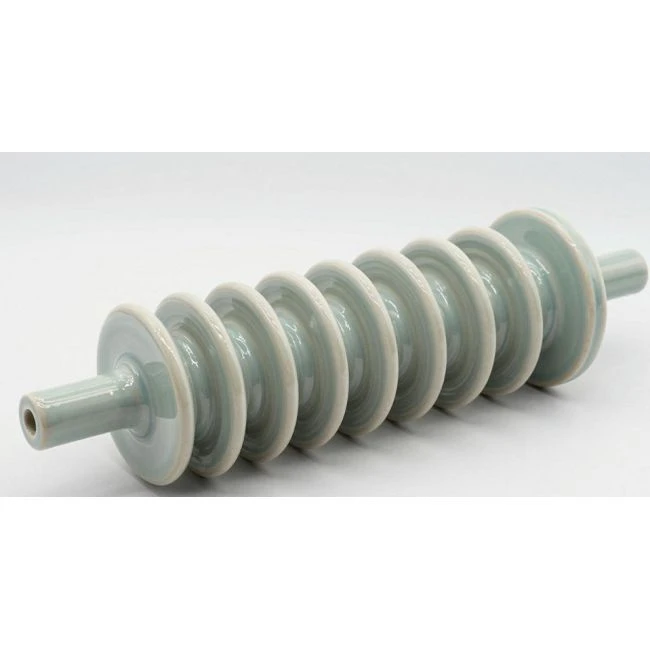
Industrial High-Technical Ceramic Insulators
Product Overview & Material Grades
Our high-temperature ceramic insulators provide electrical isolation and mechanical stability in extreme thermal environments exceeding 1700°C. Engineered for OEMs building industrial furnaces, vacuum systems, and thermal processing equipment, these components prevent electrical breakdown and thermal bridging under heavy mechanical loads.
We process technical ceramics through dry pressing, cold isostatic pressing (CIP), and green-machining followed by high-temperature sintering. Precision diamond grinding achieves tight tolerances (+/- 0.01 mm) for assembly-ready components conforming to ASTM and DIN/ISO standards.
|
Material Grade |
Purity / Composition |
Max Operating Temp |
Dielectric Strength |
Primary Characteristic |
|
Alumina (99.5% Al2O3) |
99.5% Minimum |
1750°C |
15–18 kV/mm |
High mechanical strength, excellent wear and chemical resistance. |
|
Alumina (95% Al2O3) |
95.0% |
1500°C |
12–15 kV/mm |
Cost-effective option for standard electrical insulation. |
|
Zirconia (ZrO2-YSZ) |
Yttria-Stabilized |
1400°C |
10–12 kV/mm |
Exceptional fracture toughness and thermal expansion match to steel. |
|
Steatite (MgO · SiO2) |
Magnesium Silicate |
1000°C |
8–10 kV/mm |
Low dielectric loss at high frequencies; easily dry-pressed. |
Technical Specifications & Performance Data
Engineers can reference the baseline physical and electrical properties below for FEA simulation and circuit design. Custom property modifications are available upon request.
Volume Resistivity: > 10^14 ohm·cm at 20°C; > 10^6 ohm·cm at 600°C (99.5% Alumina).
Thermal Conductivity: 25 - 35 W/m·K at room temperature, decreasing inversely with temperature.
Thermal Shock Resistance (Delta T): Up to 250°C quench test limit (dependent on geometry and grain size optimization).
Porosity: 0% open porosity (fully vitrified / gas-tight for high-vacuum applications).
Surface Finish: Standard as-fired (Ra <= 1.6 um); diamond ground and polished surfaces down to Ra <= 0.2 um available.
Application Engineering & Selection Guide
Selecting the correct ceramic insulator prevents premature dielectric failure, cracking, and vacuum contamination. Match your operating conditions against the application matrix below:
Vacuum Furnaces & Heat Treat Equipment: Use 99.5% Alumina standoffs and feedthroughs. Low alkali content eliminates outgassing risks at 10^-6 torr levels.
Induction Heating Fixtures: Choose high-purity Alumina or Zirconia bushings to withstand rapid electromagnetic heating cycles and mechanical vibration.
Semiconductor Processing Chambers: Specify high-density, high-purity 99.5% Alumina to resist corrosive halogen cleaning gases (CF4, SF6) up to 800°C.
Temperature Sensing Assemblies: Deploy multi-bore thermocouple protection tubes featuring high thermal shock resistance to prevent signal drift.
Manufacturing Process & Quality Control
We control the complete manufacturing chain-from raw powder preparation to final sintering and dimensional verification-to guarantee batch-to-batch consistency and strict linear shrinkage control (+/- 0.5%) across multi-component assemblies.
Powder Preparation & Granulation: High-purity oxide powders undergo spray-drying with organic binders to ensure uniform density distribution.
Forming Techniques:
Cold Isostatic Pressing (CIP): For large-diameter tubes, rods, and complex structural shapes requiring isotropic density.
High-Speed Dry Pressing: For high-volume, thin-walled standard washers and bushings.
Green Machining: Intricate features, threads, and internal bores are machined in the soft green state prior to firing.
Controlled-Atmosphere Sintering: Sintered in high-temperature electric kilns at temperatures up to 1800°C, achieving full densification.
Hard Machining & Metrology: CNC diamond grinding executed on sintered parts. Every production lot is verified using 3D CMM inspection systems and dye penetrant testing for micro-defects.
Supplier Evaluation & Compliance Matrix
Procurement and quality teams require verifiable compliance and rigorous risk mitigation. Our manufacturing facility operates under certified quality management systems:
Quality Management: ISO 9001:2015 certified operations.
Material Traceability & Batch Consistency: Material Test Reports (MTRs) provided per lot, detailing chemical purity assays via ICP-OES, hydrostatic density weighing, and lot-specific shrinkage tracking to eliminate performance drift.
Intellectual Property Protection: Strict non-disclosure agreements (NDAs) enforced for all custom OEM design files, ensuring complete proprietary security for custom-to-print tooling.
Environmental & Export Compliance: RoHS and REACH compliant; raw materials are conflict-free and fully documented for global customs clearance.
Export Logistics: Export-grade crating, vacuum-sealed inner packaging, and shock-absorbent cushioning designed to eliminate transit damage for international freight.
Request a Quote / Custom RFQ Checklist
To receive an accurate technical evaluation and commercial quotation within 24 hours, please provide the following details in your inquiry:
CAD Drawing: 2D/3D file (.STEP, .DWG, or .PDF) indicating critical tolerances and surface finish callouts.
Operating Environment: Maximum working temperature, thermal cycling frequency, atmosphere type (air, inert gas, vacuum, corrosive chemicals).
Electrical Requirements: Operating voltage, frequency, and minimum required dielectric strength.
Volume & Delivery Schedule: Prototype quantity versus annual estimated consumption (forecast).
Frequently Asked Questions
Q: What is the typical lead time for custom ceramic insulators?
A: Prototypes requiring standard stock materials ship within 2 to 3 weeks. Production tooling and custom geometries typically require 4 to 6 weeks, depending on grinding complexity and inspection requirements.
Q: Can you manufacture components without new tooling charges?
A: For standard geometries (rods, standard tubes, basic washers), we utilize existing tooling libraries. Custom profiles require a one-time tooling fee for forming dies or CNC program development, which is detailed upfront.
Q: How do you prevent micro-cracks and batch-to-batch property drift during sintering?
A: We utilize optimized temperature-ramp profiles and binder burnout schedules based on component cross-sectional thickness. Powder lots are rigorously tested to control linear shrinkage within +/- 0.5%, followed by 100% visual inspection and optional fluorescent dye penetrant testing.
Q: How is proprietary OEM design security handled?
A: All custom CAD data and engineering drawings are governed by strict internal access controls and standard corporate NDAs, protecting your intellectual property throughout prototyping and serial production.
Q: What is the maximum length and diameter you can produce?
A: Isostatic Pressed Tubes: Up to 300 mm outer diameter and 1200 mm length.
Dry Pressed Components: Diameters ranging from 5 mm to 150 mm. Exact limits depend on wall thickness ratios.
Hot Tags: high-temperature ceramic insulators, China high-temperature ceramic insulators manufacturers, suppliers, factory


