

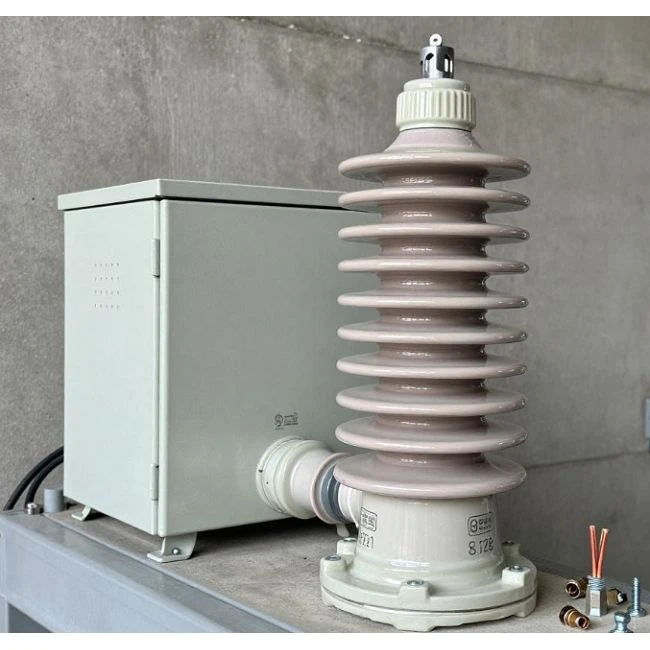
Industrial Ceramic Bushing Insulators | Technical Specifications & Sourcing Guide
Product Overview & Core Function
Ceramic bushing insulators provide reliable electrical isolation and mechanical support for conductors passing through grounded structural barriers. Engineered for high-voltage, high-temperature, and corrosive operating environments, these components prevent electrical flashover and maintain hermetic or structural integrity under continuous mechanical loads.
Technical Specifications & Material Selection
Selecting the correct ceramic formulation dictates performance under electrical stress and thermal cycling. Review the baseline technical parameters below for design validation. Creepage distances and electrical clearances are engineered to comply with IEC 60137 (for insulated bushings) and relevant IEEE/ANSI standards depending on regional grid deployment.
|
Property |
95% Alumina (Al2O3) |
C221 Steatite |
Test Standard |
|
Dielectric Strength |
15 - 18 kV/mm |
10 - 12 kV/mm |
ASTM D149 |
|
Volume Resistivity |
>= 10^14 Ohm*cm (20°C) |
>= 10^12 Ohm*cm (20°C) |
ASTM D257 |
|
Flexural Strength |
300 - 350 MPa |
140 - 160 MPa |
ISO 14704 |
|
Max Operating Temp |
1600°C |
1000°C |
Continuous Use |
|
Water Absorption |
0% (Vitreous) |
< 0.1% |
ASTM C373 |
|
Linear Thermal Expansion |
7.5 x 10^-6 /°C (20-500°C) |
8.5 x 10^-6 /°C (20-500°C) |
ASTM C372 |
Manufacturing & Quality Control Process
Strict process control eliminates internal voids, micro-fissures, and dimensional drift caused by ceramic firing shrinkage (typically 15% to 20%).
Powder Preparation: Spray-dried granulation ensures uniform binder distribution and consistent green density during uniaxial or isostatic pressing.
Green Machining: Complex geometry shaping executed on high-precision CNC green-state lathes before high-temperature sintering.
Sintering Control: Kilns operate under monitored atmospheric control at temperatures up to 1700°C to achieve full densification and eliminate open porosity.
Metallization & Glazing (Optional): Active Metal Brazing (AMB) or Mo-Mn metallization layers applied for ceramic-to-metal sealing; high-voltage glaze applied to increase surface creepage resistance in outdoor or polluted environments.
Inspection Protocols: 100% dimensional verification via CMM; dye-penetrant inspection for surface flaws; high-voltage flashover testing performed per batch requirements.
Application Matrix
Match your operating environment to the appropriate insulator configuration:
Power Transformers: High-alumina bushings with integrated mounting flanges designed to withstand transformer oil immersion and mechanical clamping torque.
Induction Furnaces & Heating Units: Thermal-shock-resistant steatite and alumina bushings capable of resisting thermal gradients up to 800°C/min.
Vacuum Chambers & Feedthroughs: Alumina insulators featuring brazed metal flanges (Kovar or Stainless Steel 304/316) for ultra-high vacuum (10^-7 Torr) applications.
Sourcing, Packaging & Customization Parameters
We process custom orders directly from CAD drawings (STEP, IGES, SolidWorks) or technical specifications.
Dimensional Tolerances: Standard ISO 2768-mH achieved in the green state; tighter tolerances (+/- 0.05 mm) achieved via post-sintering diamond grinding.
Minimum Order Quantity (MOQ): Scaled by geometry. Prototype runs accepted for custom tooling validation; volume production available for OEM supply chains.
Export Packaging: To protect fragile technical ceramics during international transit, parts are secured in vacuum-sealed anti-static blister packs, encased in high-density molded polyethylene foam, and packed inside heavy-duty export-grade corrugated cartons or fumigation-free wooden crates.
Documentation Provided: Material Test Reports (MTR), Certificate of Conformance (CoC), Dimensional Inspection Reports, and RoHS/REACH declarations.
Frequently Asked Questions
Q: How do you prevent micro-cracking during the ceramic sintering process?
A: We utilize computer-controlled gas-fired and electric tunnel kilns with custom thermal profiles. This eliminates rapid temperature gradients during the critical quartz-inversion phase and binder burnout stage, ensuring zero internal porosity.
Q: Can you manufacture ceramic-to-metal assemblies directly?
A: Yes. We apply Mo-Mn (Molybdenum-Manganese) metallization followed by nickel plating, allowing direct silver-brazed or active metal brazing (AMB) assembly with copper, Kovar, or stainless steel hardware.
Q: What file formats are required for custom RFQs?
A: Submit 2D drawings with GD&T callouts (PDF) alongside 3D STEP or IGES files. Specify operating voltage, working temperature, and expected mechanical load so our engineering team can verify wall thickness and creepage distance.
Q: What is the standard lead time for prototype tooling vs. mass production?
A: Prototype tooling and sampling require 3 to 4 weeks. Volume production runs typically ship within 5 to 7 weeks depending on post-sintering diamond grinding requirements.
Request for Quote (RFQ) Technical Submission Template
To accelerate your project evaluation, please include the following technical metrics when submitting drawings:
Operating Parameters: Voltage rating (kV), working temperature (°C), and expected mechanical load (N or MPa).
Material Specification: 95% Alumina or C221 Steatite.
Interface Requirements: Flange type, threading specs, or metallization/brazing requirements.
Estimated Annual Volume: Prototype quantity vs. batch production scale.
Hot Tags: ceramic bushing insulators, China ceramic bushing insulators manufacturers, suppliers, factory


