

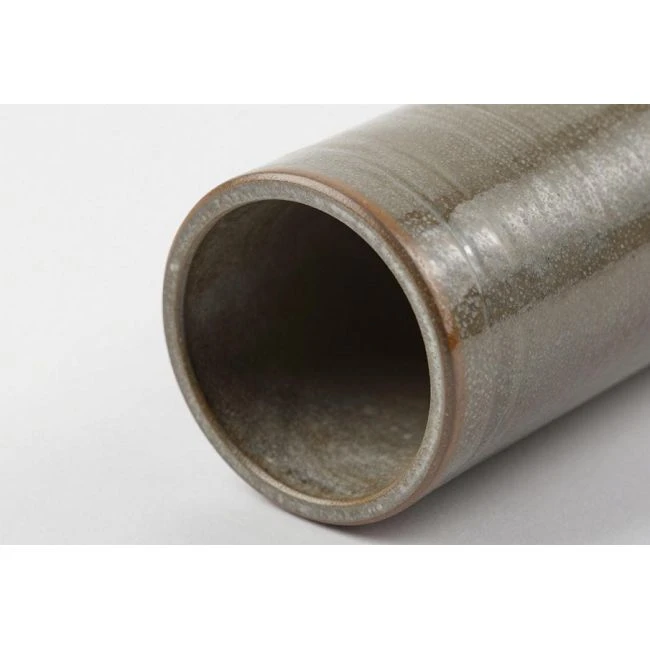
Industrial High-Process Ceramic Sheath Tubes for Extreme Thermal Environments
Technical Compliance & Quality Assurance: Manufactured under ISO 9001:2015 quality management standards. 100% Helium leak-tested. Comprehensive Material Test Reports (MTR) provided with every production batch. Traceability and international compliance guaranteed.
Technical Specifications & Material Grades
Selecting the correct ceramic composition is critical to preventing catastrophic sensor failure and unexpected operational downtime in high-temperature plants. Below are our standard high-purity engineering ceramic compositions utilized for high-temperature protection tubes, fully compliant with international industrial standards.
|
Material Grade |
Purity / Composition |
Max. Service Temp. |
Thermal Shock Resistance |
Key Chemical Resistance |
Typical Applications |
|
Alumina (Al2O3) |
99.3% High-Density |
1800°C (3272°F) |
Moderate (Preheating recommended) |
Highly resistant to reducing atmospheres and alkaline vapors |
Precious metal thermocouples, semiconductor furnaces |
|
Alumina (Al2O3) |
95.0% Standard |
1500°C (2732°F) |
Good |
Resistant to mild acidic and neutral slags |
Heat treatment furnaces, ceramic kilns |
|
Recrystallized Silicon Carbide (R-SiC) |
SiC > 99% |
1650°C (3002°F) |
Excellent |
Extreme resistance to thermal shock and abrasion |
Waste incineration, high-velocity burner protection tubes |
|
Mullite (3Al2O3 * 2SiO2) |
Composite |
1350°C (2462°F) |
High |
Good resistance to cyclic thermal fatigue |
Metal casting, continuous annealing furnaces |
Dimensional Tolerances & Manufacturing Standards
Standard production follows strict metric tolerances to ensure direct drop-in replacement for existing probe assemblies and OEM instrumentation housings.
Outer Diameter (OD): Up to 60 mm +/- 0.5 mm (Custom ground finishes available for high-precision clearance seals).
Inner Diameter (ID): Manufactured with concentricity deviation under 0.1 mm to prevent thermocouple element binding during installation.
Max Length: Up to 2,000 mm in a single continuous piece; longer configurations utilize precision-machined ceramic interlocking joints.
Gas-Tightness: Verified via helium mass spectrometer leak testing; open porosity < 0.1% for 99.3% Alumina grades to protect core sensor elements from aggressive process gas ingress.
Application-Driven Selection Guide
Different thermal environments require exact material and structural pairing to maximize service life:
Petrochemical Catalytic Units: Requires 99.3% Alumina to withstand sulfur-bearing reducing gases at temperatures exceeding 1200°C without silica migration or structural degradation.
Metal Heat Treatment & Brazing: 95% or 99.3% Alumina tubes block hydrogen and carbon penetration, preserving thermocouple calibration stability over extended multi-batch cycles.
Municipal Waste Incinerators: Recrystallized Silicon Carbide (R-SiC) resists high-velocity fly ash erosion and thermal fatigue during rapid boiler startup and shutdown cycles.
Manufacturing & Quality Control Protocol
Our factory-direct manufacturing process controls eliminate micro-defects that trigger thermal failure under load.
Raw Material Preparation: Spray-dried sub-micron oxide powders with verified particle size distribution (PSD) to ensure uniform green body density.
Forming Techniques: Isostatic pressing (CIP) applied for large-diameter or long-span tubes to eliminate internal stress gradients and structural anisotropy.
Sintering: High-temperature gas-fired and electric tunnel kilns operating up to 1850°C with controlled atmospheric dwell times for complete grain growth and pore elimination.
Inspection & Testing:
- Dye penetrant inspection for surface micro-fissures.
- Dimensional verification via laser optical gauges.
- Dielectric breakdown and thermal conductivity sample validation per production lot.
Frequently Asked Questions
Q: What is the primary cause of ceramic sheath tube failure in industrial furnaces?
A: Thermal shock is the leading cause. Rapid temperature fluctuations (exceeding 150°C per minute) induce localized mechanical stress that exceeds the tensile strength of the ceramic matrix. Preheating the protection tube before insertion into active high-temperature zones mitigates this risk.
Q: Can you supply custom lengths and closed-end configurations?
A: Yes. We process custom orders based on engineering CAD drawings. End configurations include round closed-end, flat closed-end, slotted mounting flanges, and multi-bore profiles for dual-element sensor assemblies.
Q: What is the minimum order quantity (MOQ) for custom dimensions?
A: MOQs depend on tooling setup. For standard metric sizes, pilot orders starting at 10 pieces are supported. Custom CIP tooling for non-standard diameters requires a minimum batch run verified during engineering drawing review.
Q: How do you verify gas-tightness at high temperatures?
A: Each production lot undergoes high-vacuum helium mass spectrometer leak testing prior to dispatch. High-purity 99.3% Alumina variants achieve zero open porosity, preventing fugitive process gases from poisoning platinum-rhodium thermocouple wires.
Request an Engineering Quote & Material Review
To receive an accurate quotation or evaluate material compatibility for your operating environment, share your specifications with our engineering team:
[Upload Your Drawing for DFM & Tolerance Review]
[Request Free Material Sample / Lab Test Bar]
Hot Tags: high-temperature ceramic sheath tubes, China high-temperature ceramic sheath tubes manufacturers, suppliers, factory, Ceramic Cigarette Holder, ceramic insulation spacer block, ceramic locating pin, ceramic mounting bracket insert, ceramic structural accessory, zirconia ceramic spacer


