

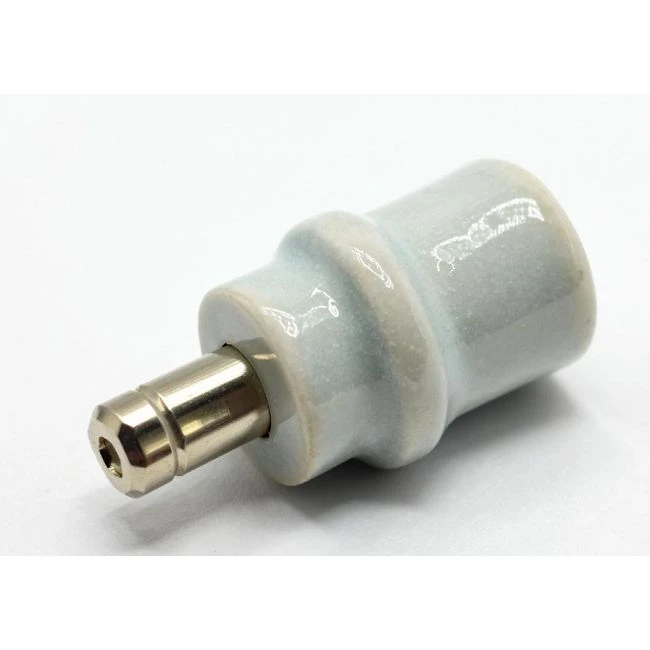
High-Temperature Ceramic Barrier Terminal Blocks
Steatite Porcelain Connectors Engineered for Extreme Thermal & High-Voltage Environments
Technical Overview & Specifications
Ceramic barrier terminal blocks provide reliable wire-to-wire connections in environments where standard thermoplastic blocks (PA66, PC) degrade, warp, or carbonize. Molded from dense electrical-grade steatite ceramic, these blocks maintain mechanical stability and insulation resistance at continuous operating temperatures up to 500°C.
|
Parameter |
Specification Range |
|
Body Material |
C221 Steatite Ceramic / High-Alumina Porcelain |
|
Max. Operating Temperature |
Up to 500°C (Glazed body) |
|
Rated Voltage |
450V – 1000V AC/DC |
|
Rated Current |
10A – 100A (Depending on model size and wire cross-section) |
|
Wire Capacity |
1.5 mm2 to 25 mm2 (16 AWG to 4 AWG) |
|
Metal Insert Material |
Nickel-Plated Brass / Zinc-Plated Steel Screws |
|
Pole Configurations |
1-Pole, 2-Pole, 3-Pole, up to 12-Pole modular |
Material & Manufacturing Process
Dry-Press Ceramic Molding: Raw steatite powder is granulated and compressed in high-tonnage hydraulic presses at 120 MPa to eliminate internal voids and ensure uniform density prior to firing.
High-Temperature Tunnel Kiln Firing: Blocks are sintered in continuous gas-fired kilns at temperatures exceeding 1300°C. This phase vitrifies the ceramic structure, yielding a low-porosity, high-dielectric body that resists moisture absorption and chemical attack.
Glazing Process: Exposed outer surfaces (excluding mating terminal faces) undergo high-temperature glazing to seal micro-pores, preventing dust accumulation and enhancing surface resistivity in humid conditions.
Machining of Metal Inserts: Current bars are machined from solid brass stock on CNC multi-axis lathes, followed by an electroplated nickel coating (3 to 5 um) to prevent galvanic corrosion when mating with copper wiring.
Dimensional & Selection Guide
To integrate these blocks into your electrical enclosure or heating assembly, reference the standard configurations below. Custom hole spacings and mounting footprints are supported for OEM projects.
Miniature Series (10A - 15A): Ideal for compact instrument wiring and laboratory heating apparatuses. Pitch: 8.5 mm.
Standard Industrial Series (30A - 50A): Deployed in commercial ovens, injection molding heater bands, and kiln control boxes. Pitch: 12 mm to 16 mm.
Heavy-Duty Series (60A - 100A): Utilized for main power feeds in industrial heat-treatment lines and heavy electrical panels. Pitch: 20 mm+.
Quality Control & Testing Standards
Every production lot undergoes verification against international electrical safety and mechanical benchmarks:
Dielectric Strength Test: Withstands 2500V AC for 60 seconds without breakdown between adjacent terminals.
Torque Resistance Testing: Terminal screws are subjected to calibrated torque testing (0.8 to 2.5 Nm) to verify thread integrity in the ceramic housing without stripping or cracking the surrounding barrier walls.
Thermal Shock Testing: Samples are cycled between room temperature and 400°C in a thermal chamber to screen for micro-fissures.
Certifications: Manufactured in compliance with RoHS, REACH, and applicable CE/UL clearance standards. Full material test reports (MTR) provided upon request.
Typical Industrial Applications
Industrial Electric Furnaces & Kilns: Internal power distribution wiring subject to radiant heat above 300°C.
Commercial Food Service Equipment: Heavy-duty commercial ovens, industrial fryers, and high-temperature packaging sealers.
Heating, Ventilation, and Air Conditioning (HVAC): Element connections in duct heaters and industrial resistance air heaters.
Lighting Systems: High-wattage floodlights, foundry lighting, and theatrical stage lighting fixtures operating near heat sources.
Frequently Asked Questions
Q: How do high-temperature ceramic terminal blocks prevent short circuits at high voltages?
A: The high barrier walls molded between individual poles increase the creepage distance (surface tracking path) and electrical clearance. This physical separation stops electric arcs from bridging adjacent terminals under high voltage or contamination buildup.
Q: What is the maximum tightening torque for the porcelain terminal screws?
A: For standard 30A blocks (using M4 screws), the recommended torque is 1.2 Nm to 1.5 Nm. Exceeding specified torque limits can induce point-stress fractures in the rigid ceramic material. Always use calibrated hand tools or a torque-limited driver.
Q: Are these steatite wire connectors resistant to chemical vapors and oil?
A: Yes. The steatite ceramic body is chemically inert, resisting organic solvents, acids, oils, and salt mist. However, verify that the metal screw and insert materials (nickel-plated brass) match your specific corrosive environment requirements.
Q: Can I request custom mounting hole configurations for existing panel retrofits?
A: Yes. As an OEM manufacturer, we modify tooling to accommodate specific mounting hole centers, pole counts, and customized brass insert thread sizes (e.g., metric M3 to M6) based on your engineering CAD files.
Q: What is the standard packaging method to prevent transit breakage for international shipping?
A: Given the brittle nature of porcelain terminal blocks, units are individually nested in high-density molded pulp trays or expanded polyethylene foam cells, packed in double-wall corrugated master cartons designed to pass drop-test standards (ISTA 3A).
Hot Tags: ceramic barrier terminal blocks, China ceramic barrier terminal blocks manufacturers, suppliers, factory


