

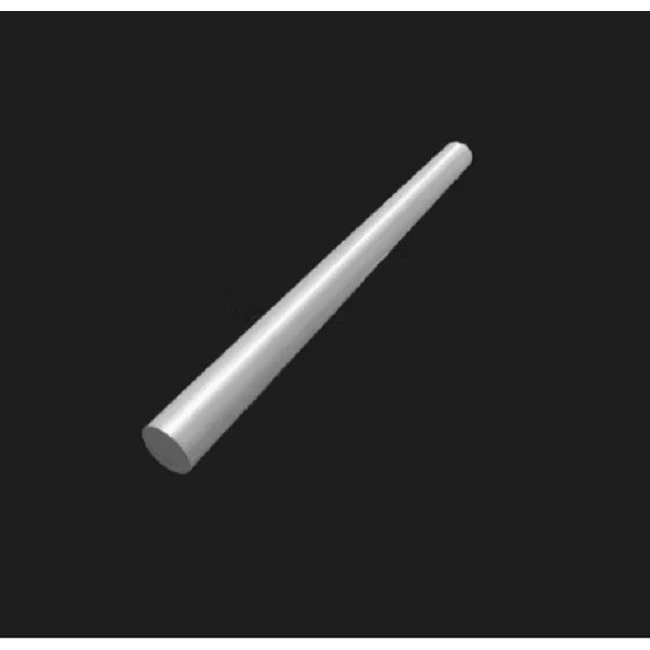
High-Performance Silicon Nitride (Si3N4) Ceramic Rods
Engineered for extreme thermal shock, high mechanical stress, and aggressive wear environments.
Product Judgment: Material Grades & Physical Properties
Silicon Nitride (Si3N4) outperforms traditional alumina and zirconia in applications requiring high fracture toughness paired with thermal shock resistance. Below are the baseline technical specifications for our Gas Pressure Sintered (GPS) Si3N4 rods (Grade: GPS-SN20).
|
Property |
Typical Value |
Testing Standard |
|
Density |
>= 3.20 g/cm3 |
ASTM C373 |
|
Flexural Strength (4-Point) |
800 - 950 MPa |
ASTM C1161 |
|
Fracture Toughness (KIC) |
6.5 - 7.0 MPa·m1/2 |
ASTM C1421 |
|
Vickers Hardness (HV10) |
15 - 16 GPa |
ASTM C1327 |
|
Coefficient of Thermal Expansion |
3.2 x 10^-6 /K (20-1000°C) |
ASTM E228 |
|
Max Service Temperature |
1000°C (oxidizing atmosphere) |
- |
Product Selection: Dimensions & Precision Grinding Capabilities
We supply extruded, isostatically pressed, and precision-ground Gas Pressure Sintered Silicon Nitride Rods to match specific OEM assembly interfaces.
Diameter Range: 2.0 mm to 100.0 mm
Standard Lengths: 100 mm, 200 mm, 300 mm (Custom lengths up to 500 mm available)
Surface Finish Options: As-sintered (Ra <= 1.6 um), fine-ground (Ra <= 0.4 um), or mirror-polished (Ra <= 0.05 um).
Tolerance Tiers:
- Standard Sintered: +/- 0.1 mm
- Precision Centerless Ground (OD): Down to +/- 0.001 mm
- Straightness Control: <= 0.01 mm / 100 mm
Application Judgment & Fit
Select industrial-grade ceramic rods when operating conditions exceed the design limits of engineering metals and standard technical ceramics.
Semiconductor Processing Equipment: Utilized as lift pins, guide rods, and structural support components in plasma etching and chemical vapor deposition (CVD) chambers due to low ionic contamination and high plasma resistance.
Thermal & Welding Fixtures: Applied in high-temperature induction heating setups and resistance welding jigs where electrical insulation and zero metal pick-up are mandatory.
Precision Mechanical Systems: Deployed as high-temperature drive shafts, structural pins, and alignment dowels operating in unlubricated or corrosive chemical environments.
Supplier Verification & Manufacturing Control
Procurement reliability relies on process control, not marketing claims. Our production route for high-temperature ceramic rods ensures complete lot traceability:
Raw Powder Processing: Spray-dried Si3N4 sub-micron powder with controlled particle size distribution and certified chemical purity (>= 99.9%).
Forming Technology: Cold Isostatic Pressing (CIP) applied for diameters > 20 mm to eliminate density gradients and internal micro-voids.
Sintering Process: Gas Pressure Sintering (GPS) at 1800°C - 1950°C under high nitrogen partial pressure to suppress decomposition and achieve near-theoretical density (>= 99%).
Quality Assurance & Metrology: ISO 9001:2015 certified facility. 100% dimensional inspection via laser micrometer; fluorescent dye penetrant inspection (FPI) available for crack detection on critical structural orders. Each shipment includes a batch-matched Material Test Report (MTR).
Procurement Decision & RFQ Guide
Exact Dimensions: Diameter, length, and required tolerance limits (or attach CAD/PDF engineering drawings).
Quantity: Prototype batch size vs. annual volume forecasting.
Operating Environment: Maximum working temperature, contact media, mechanical load profile, and mating material.
Quality Documentation: Specify if Material Test Reports (MTRs), third-party chemical analysis, or specific lot certifications are required.
Products DFrequently Asked Questionsescription
Q: What is the maximum continuous working temperature for these rods?
A: Silicon Nitride maintains mechanical strength up to 1000°C in oxidizing environments. Above 1000°C, gradual surface oxidation occurs, forming a protective silica layer. For inert or vacuum environments, structural use is viable up to 1200°C - 1400°C.
Q: How do you prevent internal micro-porosity during sintering?
A: We utilize Gas Pressure Sintering (GPS). The application of external nitrogen gas pressure during the final densification phase prevents thermal decomposition of Si3N4 and forces closed pores to shrink, resulting in a dense microstructure with minimal defects.
Q: Can these rods be machined after sintering?
A: Due to extreme hardness (HV10 15-16 GPa), Si3N4 cannot be machined using conventional metal-cutting tools. Post-sintering adjustments require diamond grinding, ultrasonic machining, or laser cutting. We deliver finished rods to print specifications to eliminate secondary machining at your facility.
Q: What is your standard lead time for custom-ground rods?
A: Standard stock items ship within 3 to 5 business days. Custom-ground orders requiring specific diameter tolerances or specialized finishing typically require 3 to 4 weeks, inclusive of quality inspection and material certification.
Q: How are precision-ground ceramic rods packaged for international shipping?
A: Due to high brittleness and strict tolerance requirements, all rods are individually wrapped in anti-static protective sleeves, separated by high-density closed-cell foam, and packed in reinforced export-grade wooden or heavy-duty corrugated cartons to prevent edge chipping or transit damage.
Appendix: On-Page SEO Metadata
Meta Title: Gas Pressure Sintered Silicon Nitride Rods | High-Temperature Ceramic Rods
Meta Description: Source precision-ground silicon nitride ceramic rods (Si3N4) for semiconductor and industrial applications. Review mechanical specs, GPS manufacturing processes, and request MTRs.
Hot Tags: silicon nitride ceramic rods, China silicon nitride ceramic rods manufacturers, suppliers, factory, alumina ceramic bushing, Alumina Ceramic Buttons, Ceramic Cigarette Holder, Ceramic Filter Element, ceramic insulation spacer block, ceramic wear resistant accessory


